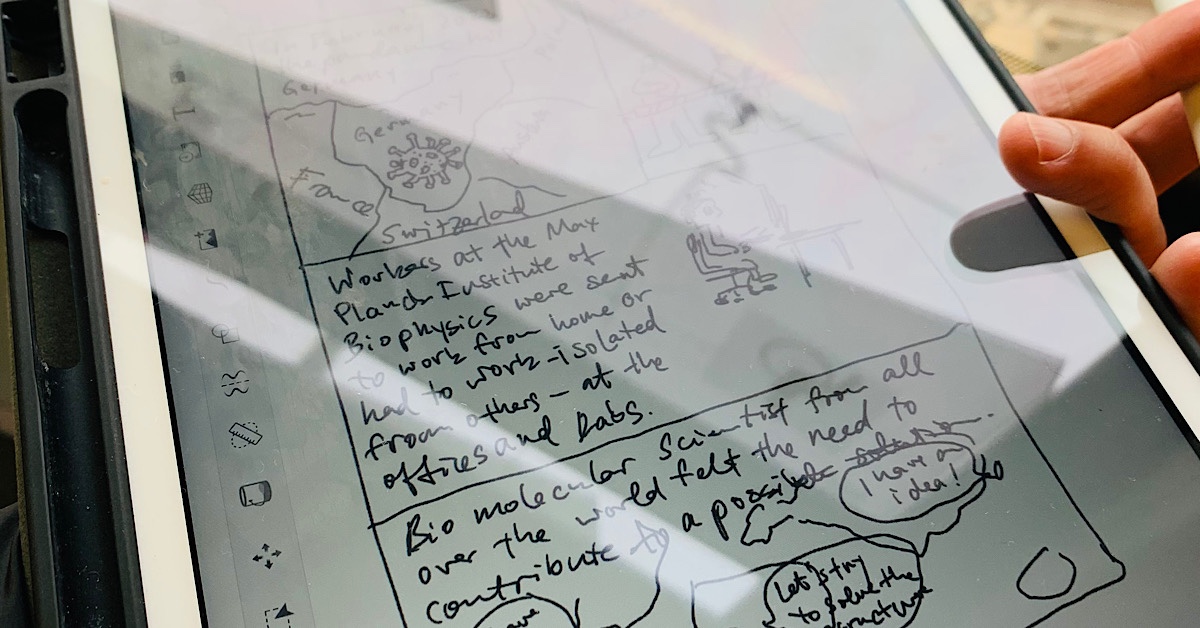
After struggling for weeks with my augmented reality (AR) and health literacy project, I finally achieved a breakthrough in October. For the AR project, I had the idea of creating a mini booklet that was entertaining and informative at the same time. For the health literacy project, I have found and joined a co-working group. I also joined the science advisory board of a health literacy project that I had been discussing already for many years.
#1: Working on demystifying science
Think small instead of big
In October, the visit of the vice president of the Max Planck Society, gave me some welcoming pressure to finalise a new prototype for my augmented reality project.
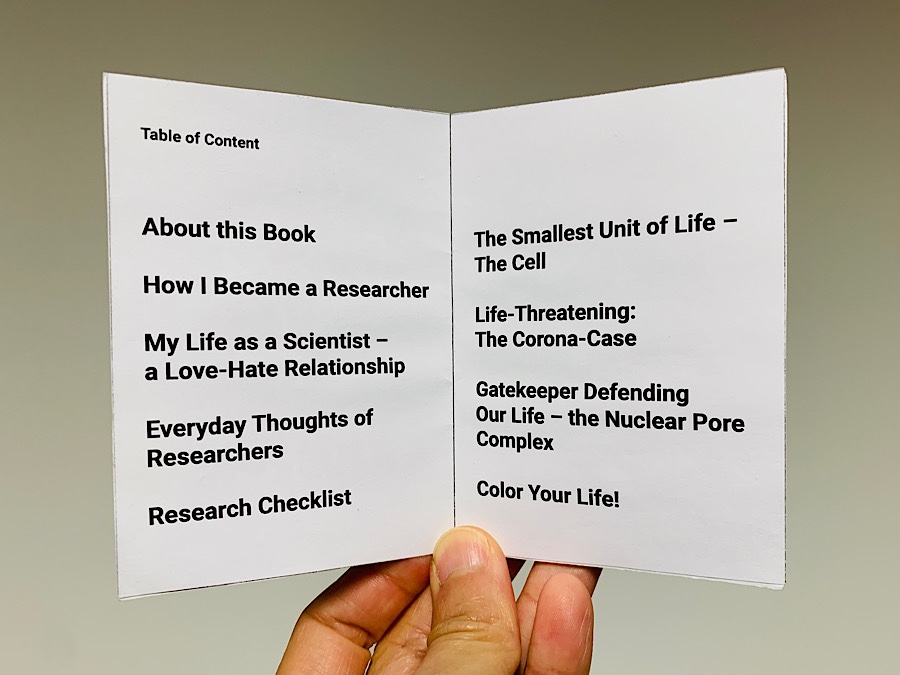
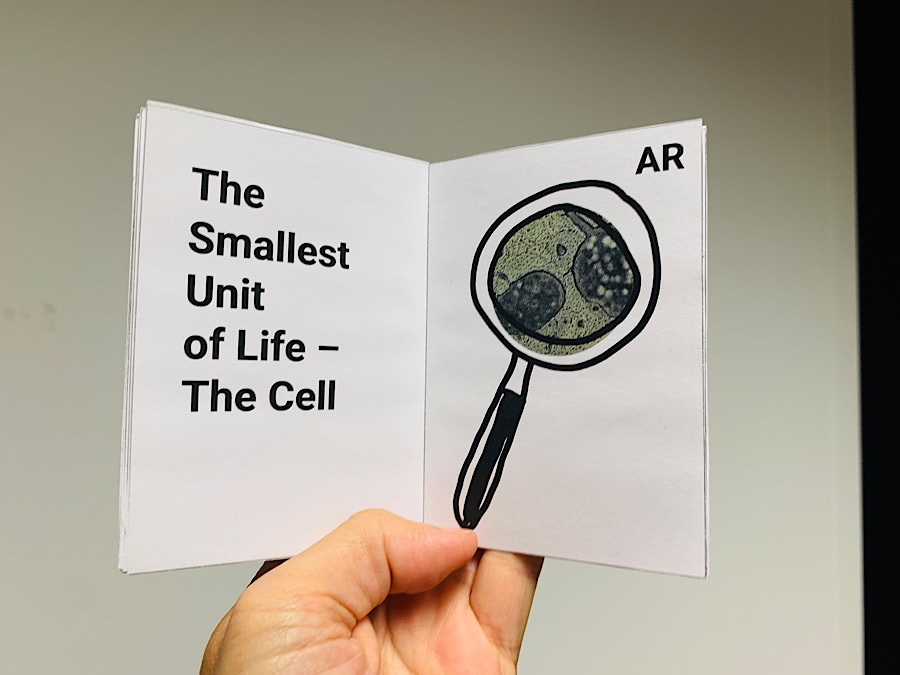
I finally had a new idea: In June, I designed a mini notebook as a promotional product. It was very popular, because it was cute and handy. Now I came up with the idea to create a mini booklet with AR elements. The small size of the booklet communicates two messages:
- It’s small, it’s easy. Don’t be afraid.
- We work on small scale things.
Of course our researchers are working on highly complex areas. But for beginners we have to start small. Starting with the real complexity would overwhelm them – and we would loose them. By making it easy for non-experts, we make them feel in control and confident.
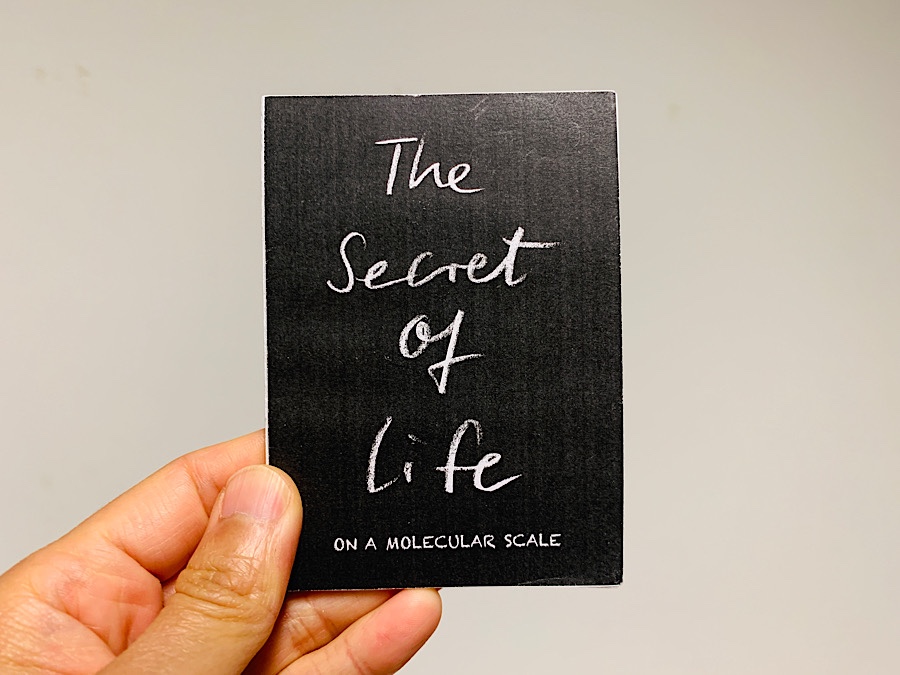
Making someone feel in control and confident is a good basis for connecting and creating trust. And we need connection and trust to get our message across. Without it it’s hard to make someone even listen to us.
Another thing I did differently in this booklet was that, instead of only showing our scientific work, I included some personal views and stories of our scientists. This way I create a human connection first.
To make it easy to access, we decided to use web AR, augmented reality that works with a smart phone or tablet without having to use additional hardware or an app. After connecting to the web AR provider, you can access the AR elements by holding your device over the images.
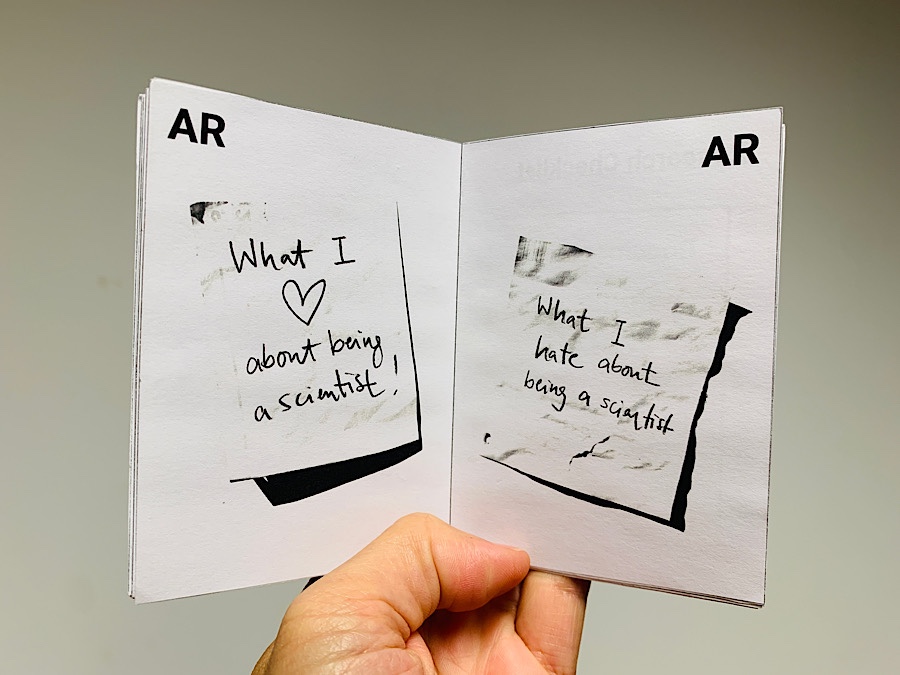
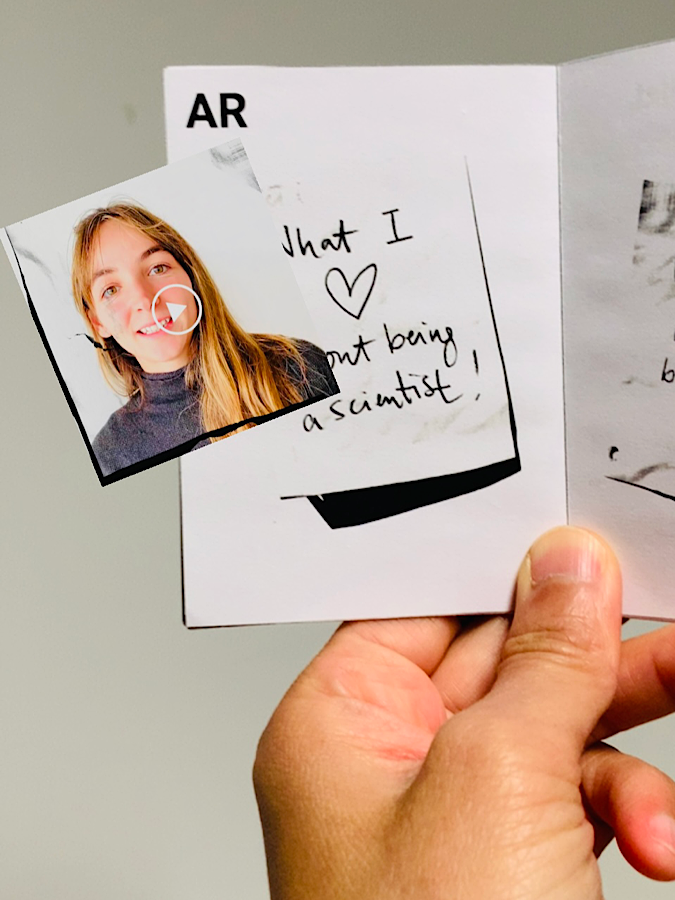
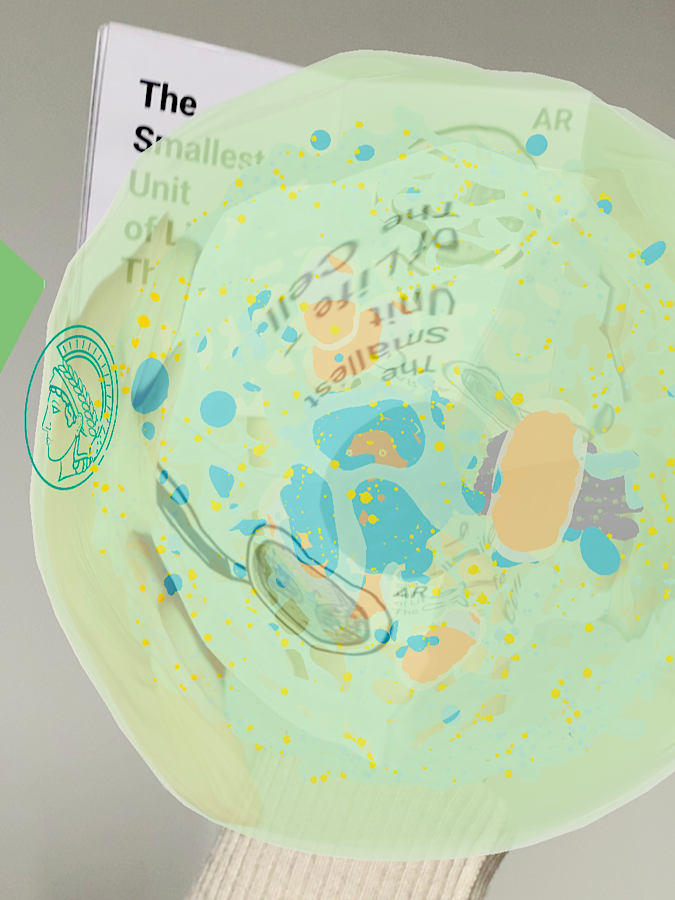
The AR content pops up – here a video and a 3-dimensional cell – once the camera of the device recognises the corresponding image.
I also made the scientific topics more lighthearted and playful:
- by drawing a comic
- by providing the outlines of a protein structure for colouring
- by creating memes
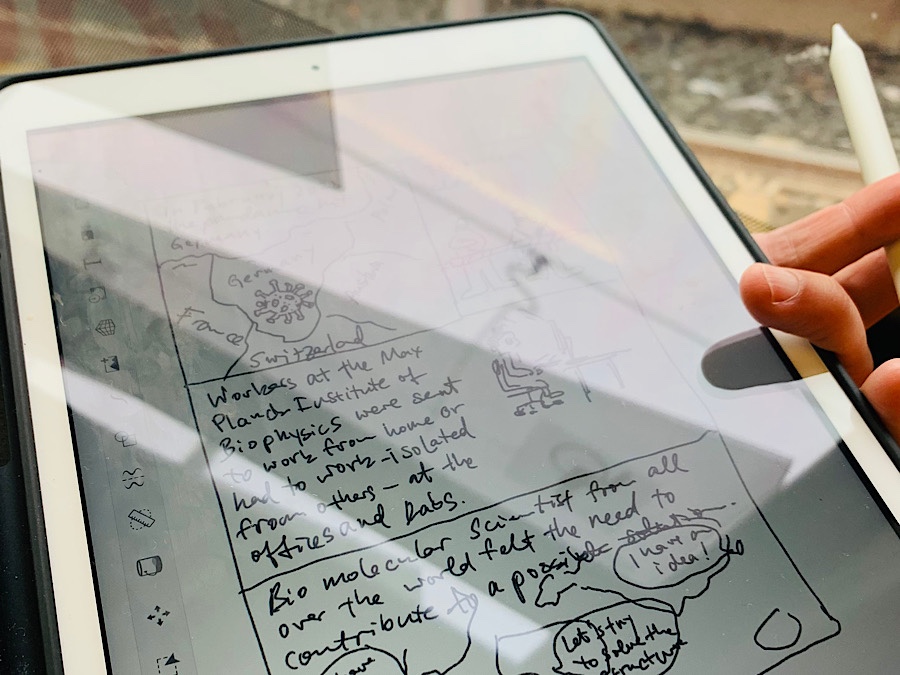
With this prototype, we will start testing it with representatives of our audience.
A cartoon that makes our Institute transparent
We commissioned Anke Kuhl, one of my favourite children books’ illustrator ❤️, to draw a cartoon for the Institute’s facade 😀! She took a lot of time to get guided tours at our Institute and to draw a first sketch. However, I had to ask her to draw a new one 😅.
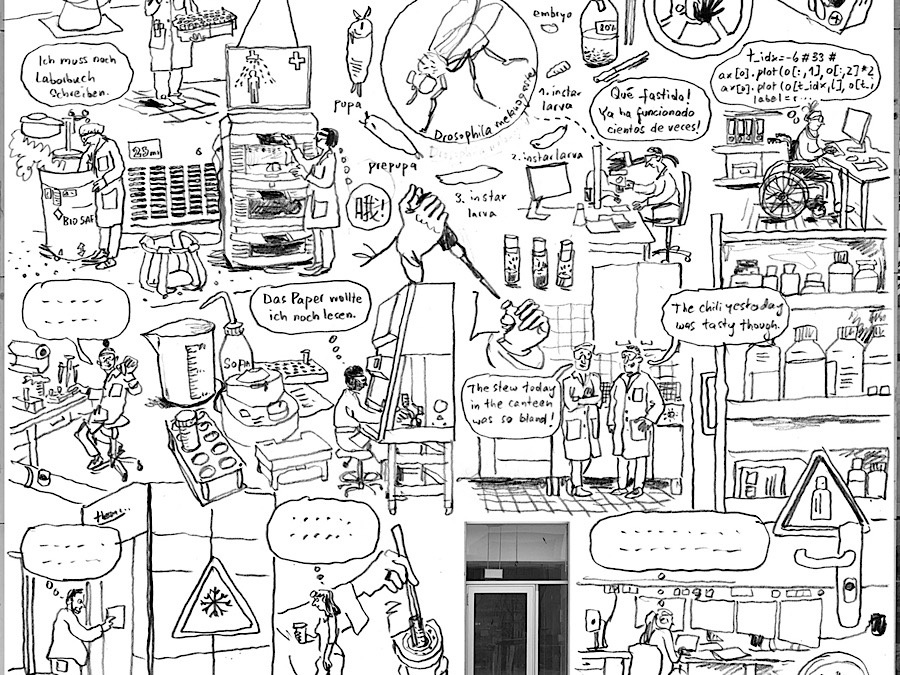
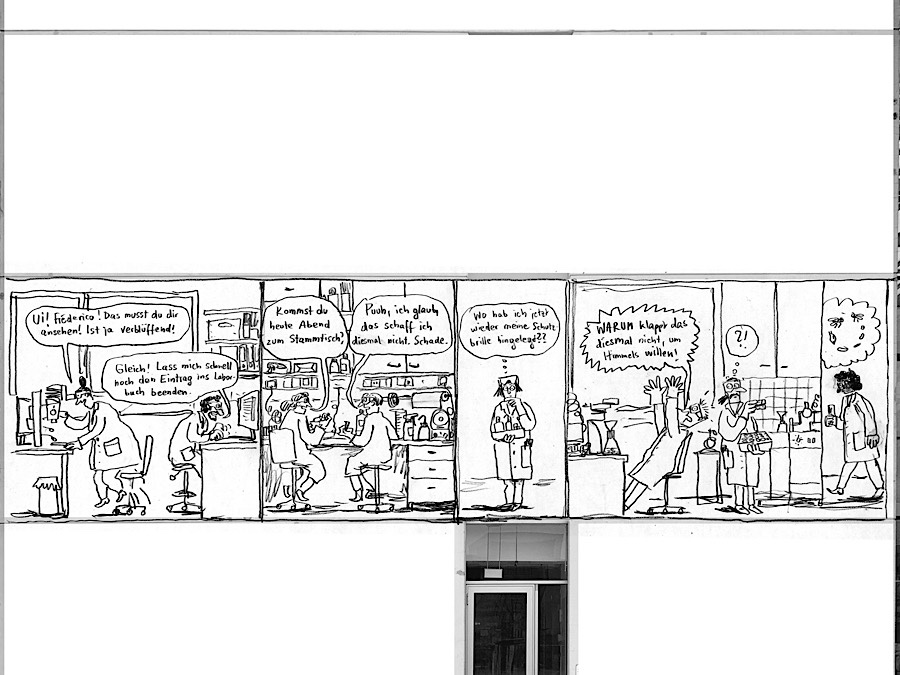
The the first draft (left) was very beautiful and elaborated! But I wanted a scaffold that gave the impression that one could look into the building and see what’s going on inside (“transparency” 😁). Also, we wanted to show researchers in funny situations that would give people a laugh! After discussing it again, Anke drew a new test draft (right).
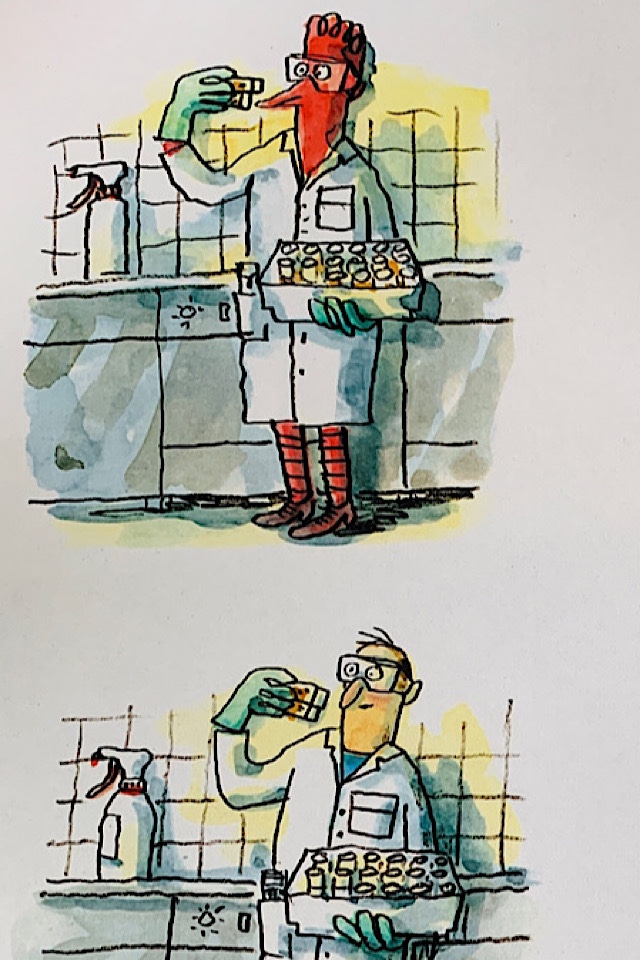
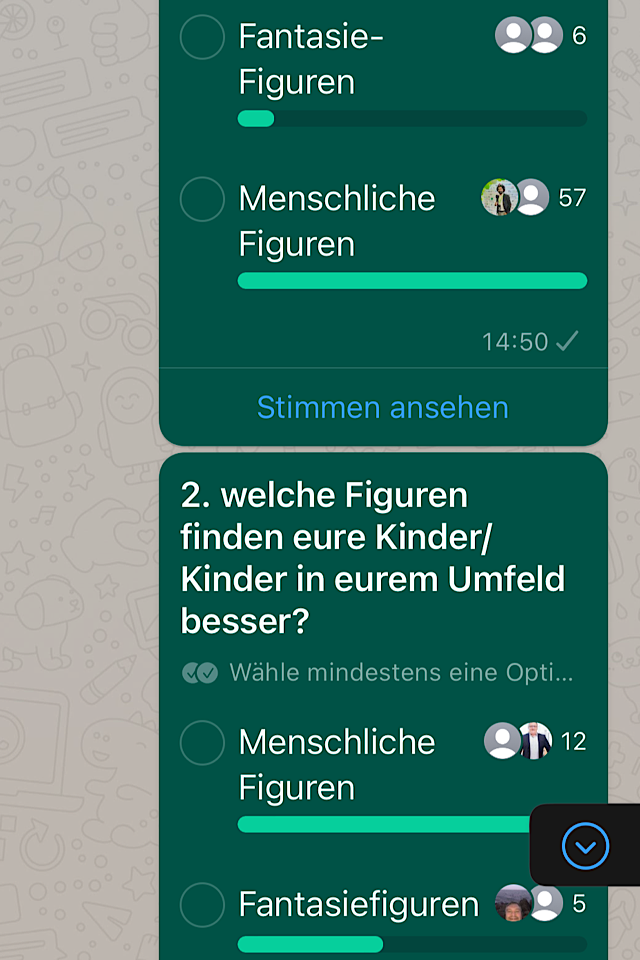
Anke also proposed to use fantasy characters instead of human looking characters. I was a bit skeptical, because I feared it wouldn’t help to demystify science, instead it would make it even more “mystic”. Katharina and I conducted surveys to make sure we weren’t making decisions only based our own opinions. I asked adults and children. I wasn’t surprised that children were more open to the fantasy characters, but the majority preferred the human characters. Hence, we decided to continue with them.
#2: Meeting science communicators of the Max Planck Society
Once a year, the science communicators of the Max Planck Society gather together to network, to align, and to get the latest news from the headquarter’s communications team.
This year’s hot topic was artificial intelligence – in several talks, we learned about practical tools and policies regarding the use of these. It was also nice to learn from challenges and inspiring practices of communicators from other Max Planck Institutes.
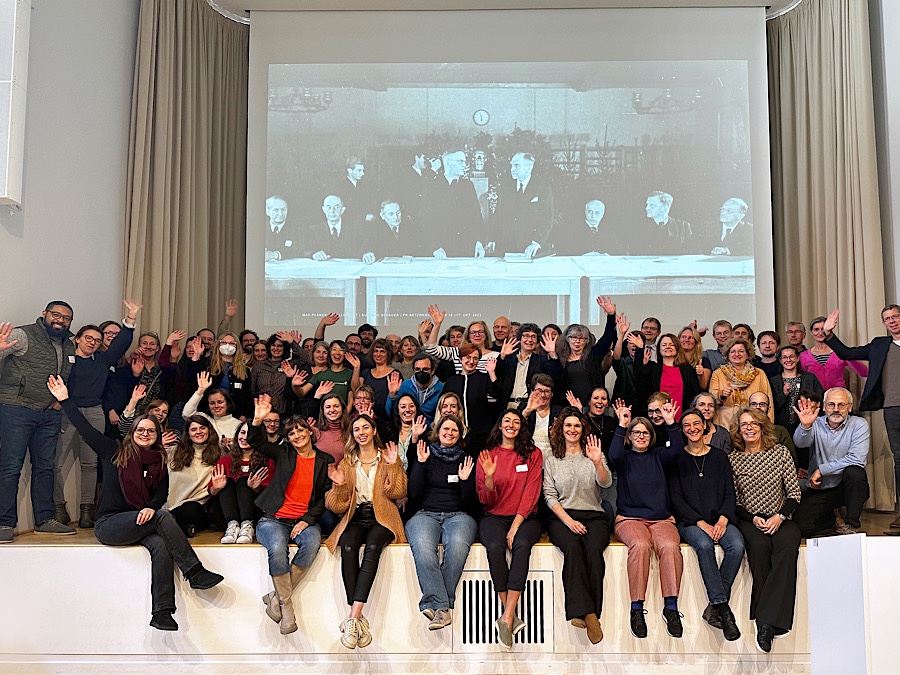
As my colleague Katharina and me have visited the communications headquarter in Munich some months ago, it was easy to approach the team for questions and new ideas. I showed them my augmented reality project and got some positive feedback.
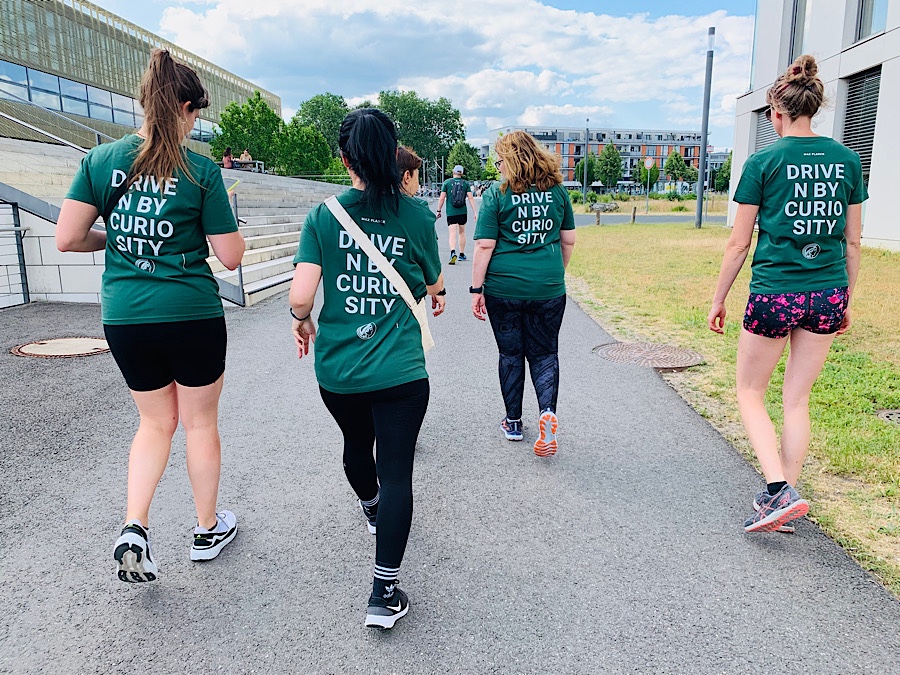
One of the most surreal moments I had during this event was, when Susanne Schauer, Head of Corporate Design of the Max Planck Society, presented some visual branding best practices. Among the examples she showed was my T-shirt design I did for the JP Morgan corporate run. She then asked who would order this shirt if they would sell it at the Society’s online shop. I turned around and saw many raised hands 😮. And in addition, she even mentioned my blog 😮!
#3: My impactful blog parade on microaggressions
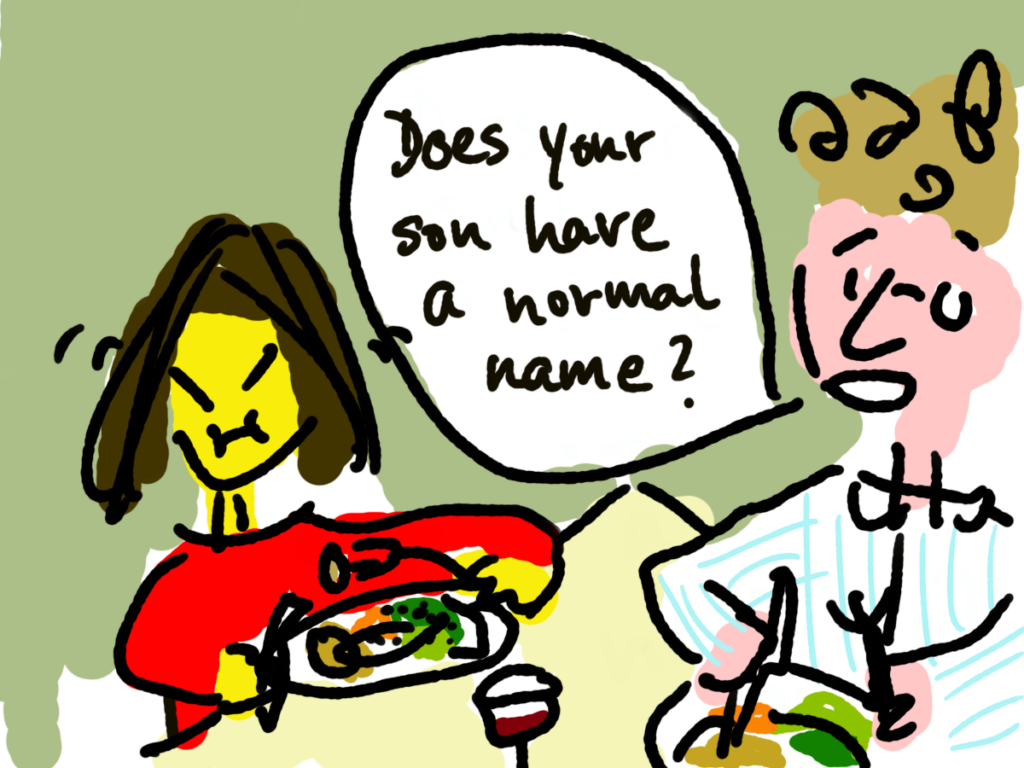
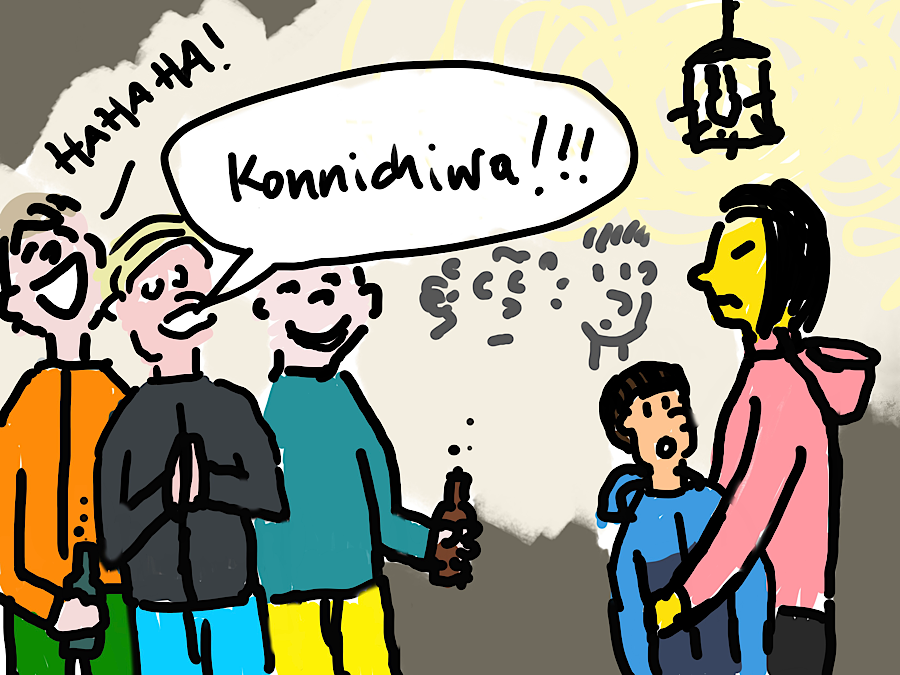
For my very first blog parade, I chose the topic “My latest tales of everyday microaggressions”, because I have many stories to tell. And because it’s entertaining, emotional and eye-opening for some people. It is also a well-studied, important topic in science and health.
The University of California Santa Cruz Academic Affairs has listed common examples here and writes “The first step in addressing microaggressions is to recognize when a microaggression has occurred and what message it may be sending. The context of the relationship and situation is critical.”.
I had a lot of fun writing my own article “Me imperfectly navigating everyday microaggressions” and drawing the cartoons. I didn’t have enough time and energy to publish it a lot on social media though. But as my blog coach Judith Peters said, it was a good first exercise on how to run a campaign.
These three gorgeous persons joined my blog parade and wrote on important topics:
- Microaggressions and Motherhood: Breastfeeding
Clare writes about the everyday microaggressions breast-feeding women are confronted with. – Oh my god, I felt that pressure, too 😤! - BLOG PARADE: MIKROAGRESSIONS
What a woman who is single is told 😳. So eye-opening for me! Thank you Bea! - A third article that is still in the process of being written. From someone who has been harassed recently. I’ll keep you updated!
If you still want to join the blog parade, you can still do so. Find all the information here. By speaking up, we spread the word. Make the world laugh, reflect, and drive change 💪!
Additional effects of the blog parade:
My friend’s daughter decided to vote against the right-wing extremists
My friend’s daughter, decided to vote at the State elections, after my friend told her about the incident she had read about in my blog parade’s article:
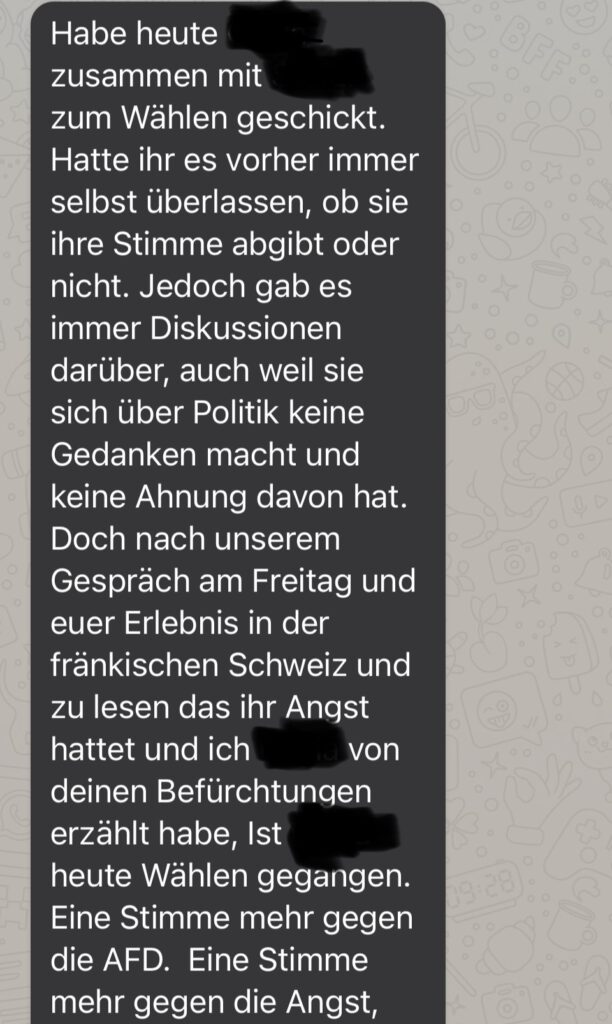
“I sent my daughter to vote together with my husband today. I had previously always left it up to her whether she cast her vote or not. However, there were always discussions about it, partly because she doesn’t care and has no idea about politics. But after our conversation last Friday and your experience in Franconia Switzerland and reading that you were scared – I told her about your fears. She went to vote today. One more vote against the AFD. One more vote against fear …”
The AFD (=“Alternative für Deutschland“, engl. Alternative for Germany) is a party that is classified as right-wing extremist by the German Institute for Human Rights. The party has gained more and more followers during the 10 years of their existence. On October 8, at the Hessian State elections, I hoped they wouldn’t gain even more votes. But they even grew stronger – now they are the second strongest party of the Hessian State Parliament 🤮😨.
My blog became more visible
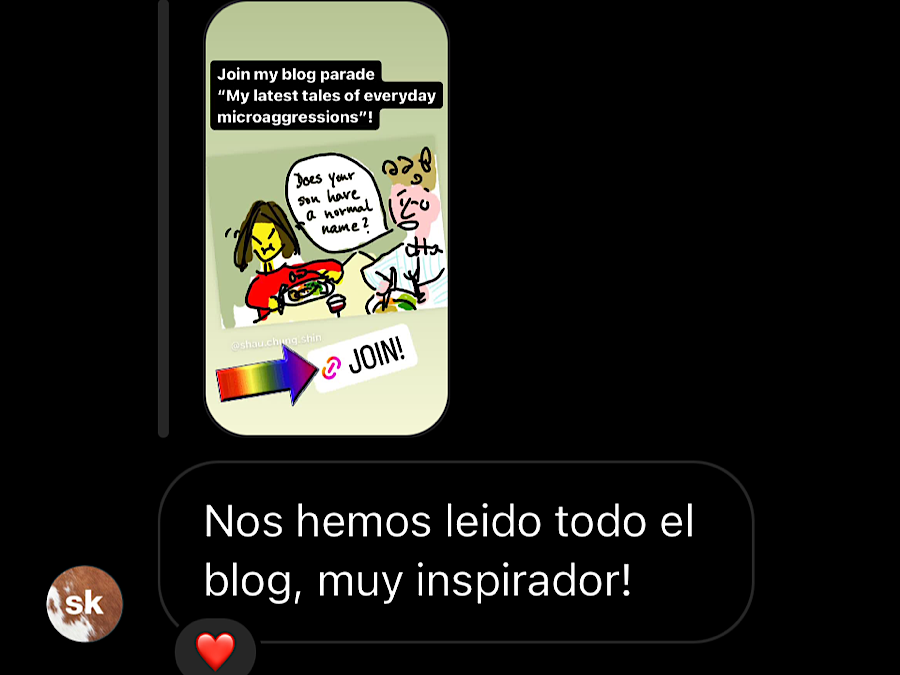
Another side-effect of my blog parade: my blog got more visibility and I got some very positive feedback.
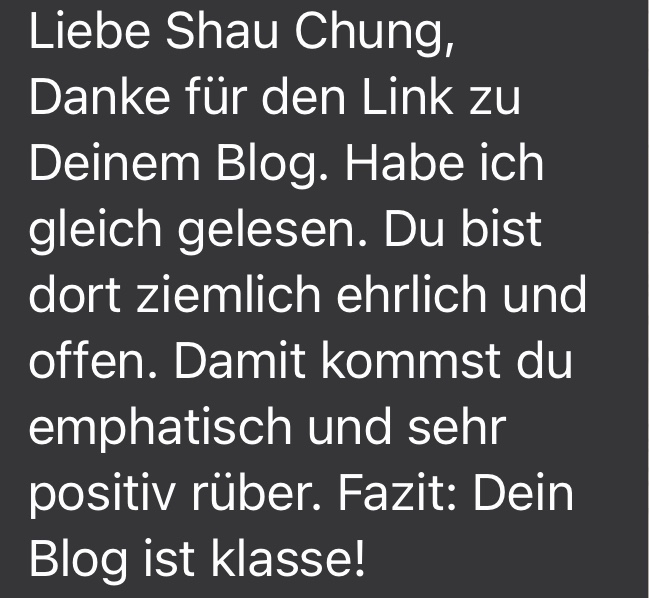
“Dear Shau Chung,
Thank you for the link to your blog. I read it straight away. You are quite honest and open here. You come across as emphatic and very positive. To summarise: your blog is great!” (left)
“We read the whole blog. Very inspiring!” (right)
What else happened?
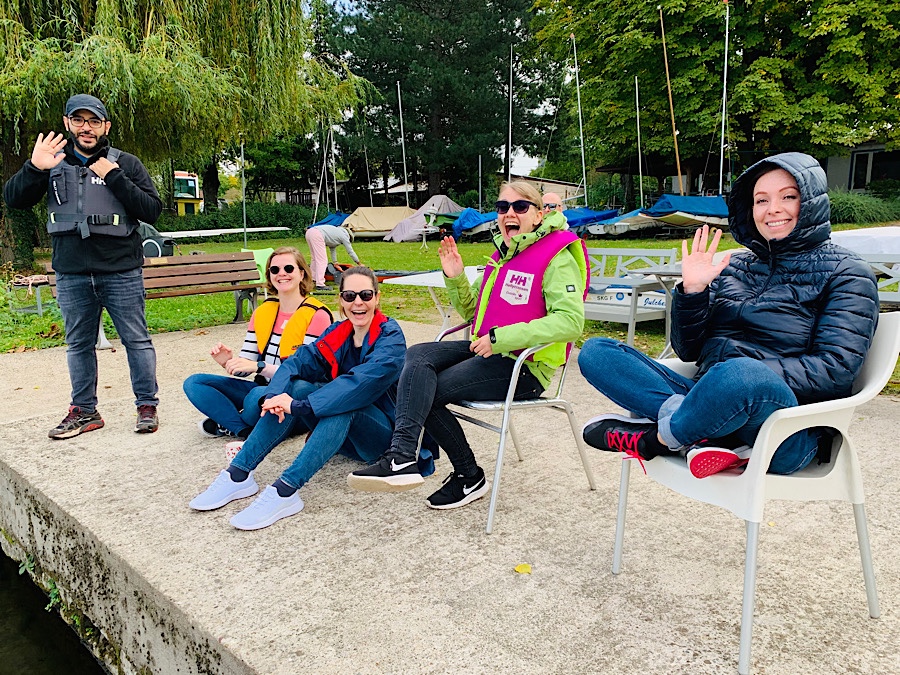
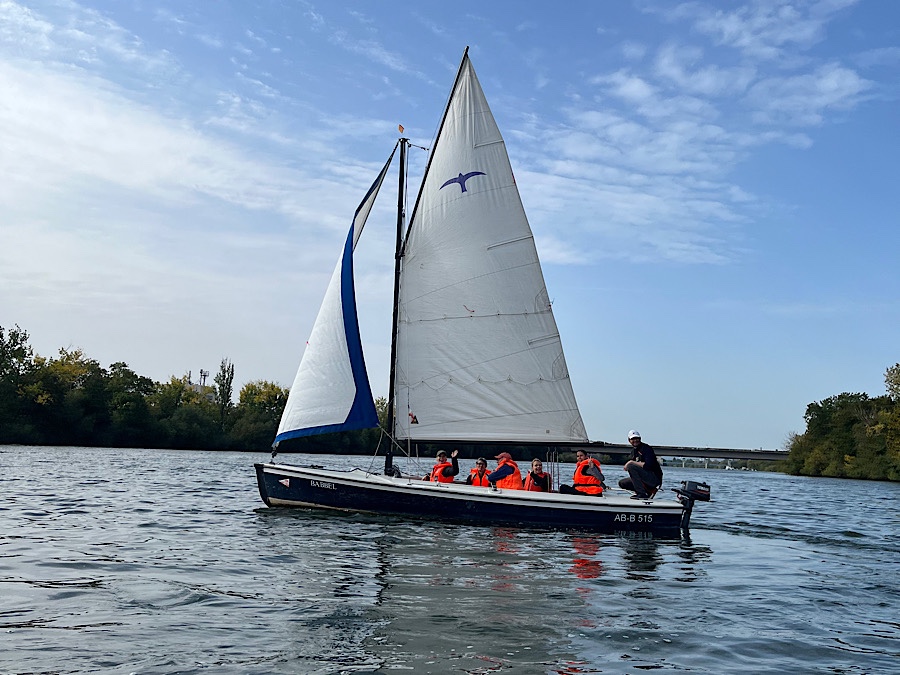
Together with my fellow members from the water sports club, I organised a taster sailing session for members of Junior Chamber International Frankfurt and Offenbach. The 20 participants had a lot of fun 😊 ! We will definitely do it again next year!
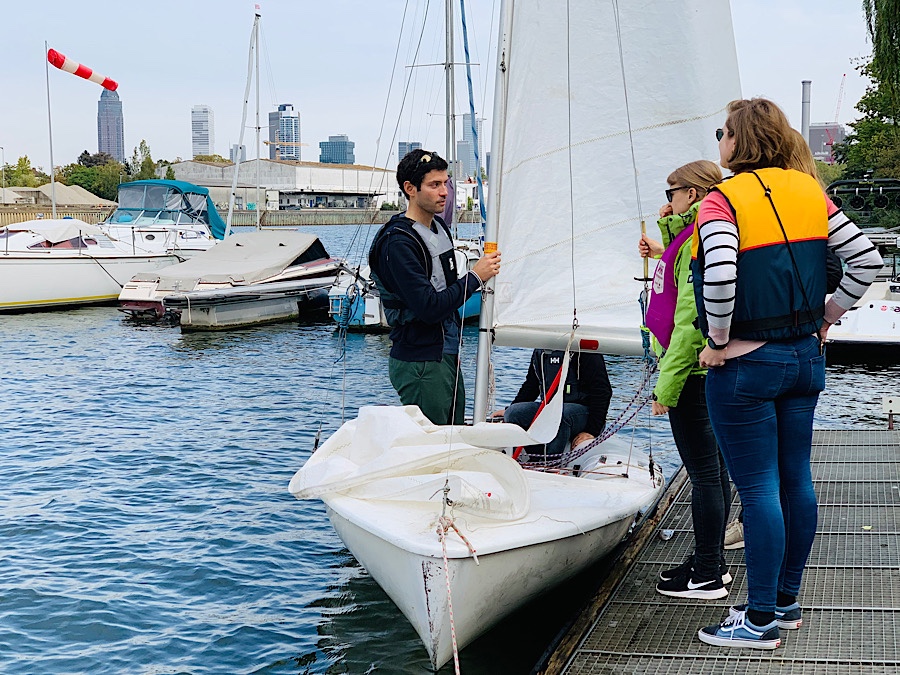
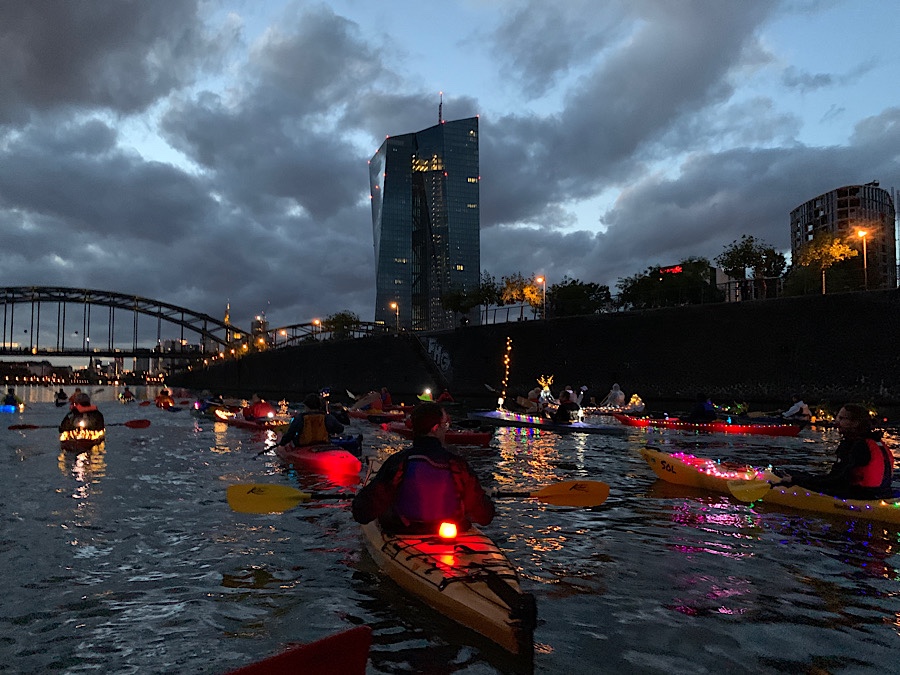
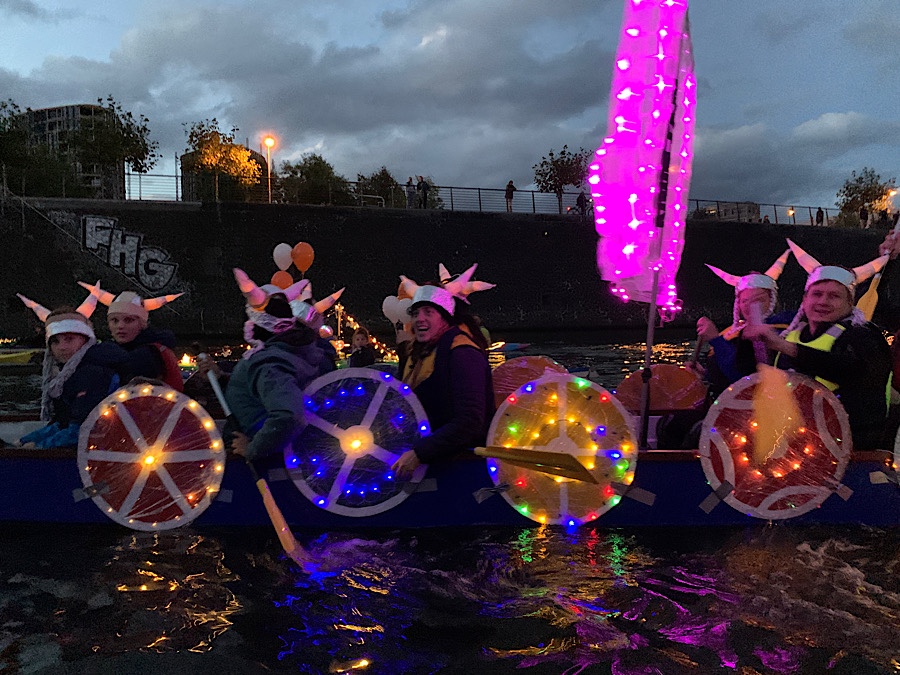
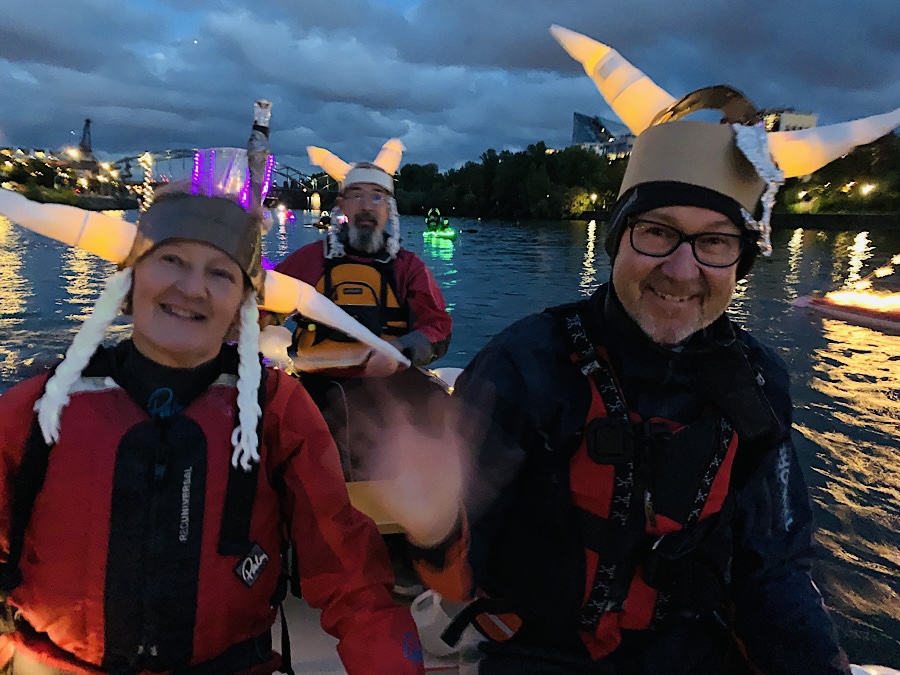
I joined the annual Frankfurt “Funtzelfahrt” with my neighbour, a night paddling session and creative lighting competition on the Main River.
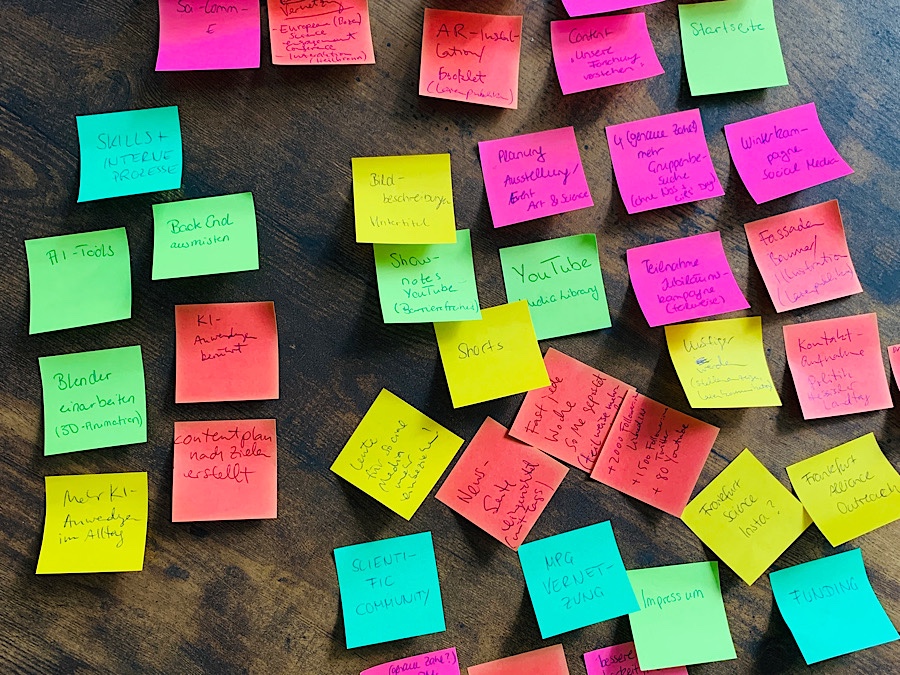
We had our annual Institute communications team retreat. As always, it was good to see how much we have accomplished during the year.
I designed a visual for my colleague Katharina’s cool outreach event (left) and my colleague Anja helped me to finalise the title with her creative ideas 😊 (right).
In Berlin, I slept at my old friend Jessica’s home and she took me to the best Mexican food place I have ever been to in Germany 🤤. I also visited my old blogging buddy Claudia (right) and ate Berlin’s best Döner with Ting (left).
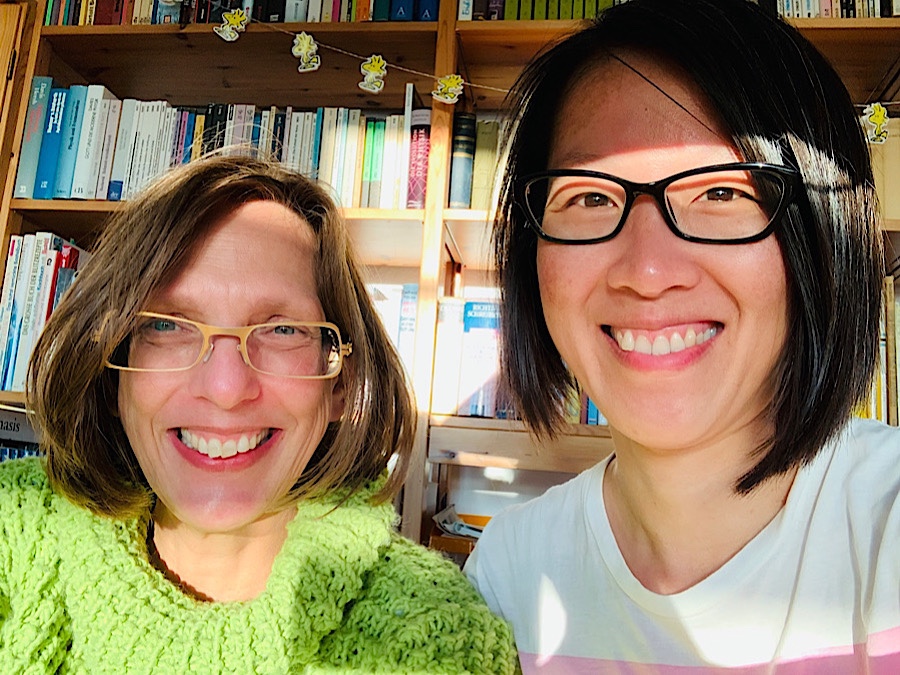
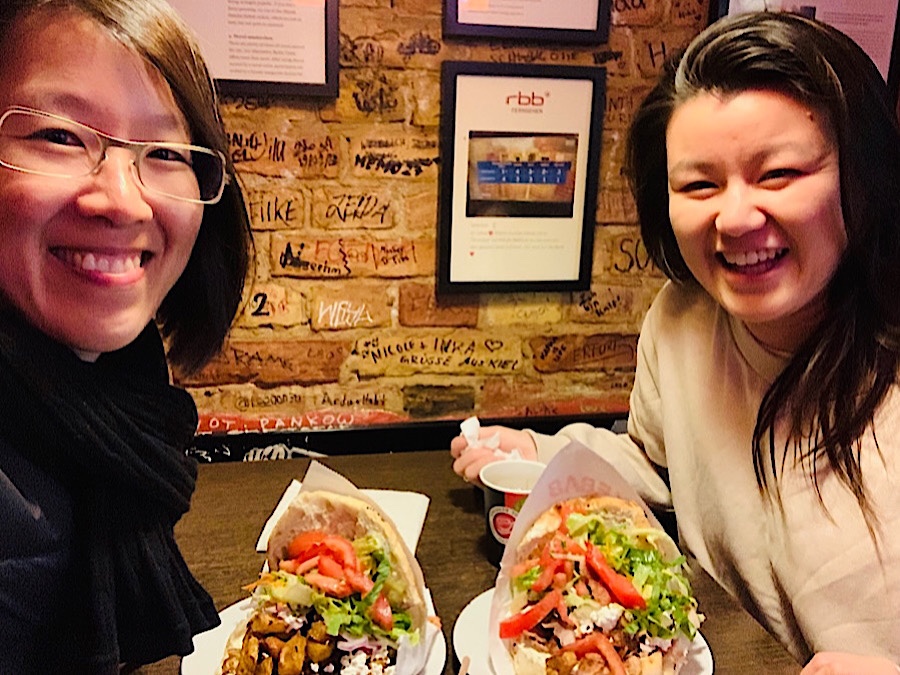
I joined the OKR group of Stefania Laventure and Julius Rummich’s co-working group – and finally progress with my psychosis brochure.
In Addition, I joined the Scientific Advisory Board of FIPPS, an initiative of the Frankfurt University Hospital that develops an information platform on psychosis for the City of Frankfurt.
I enjoyed the change of the colours of the leafs (left). And I finally started to use my new dishwasher (right).
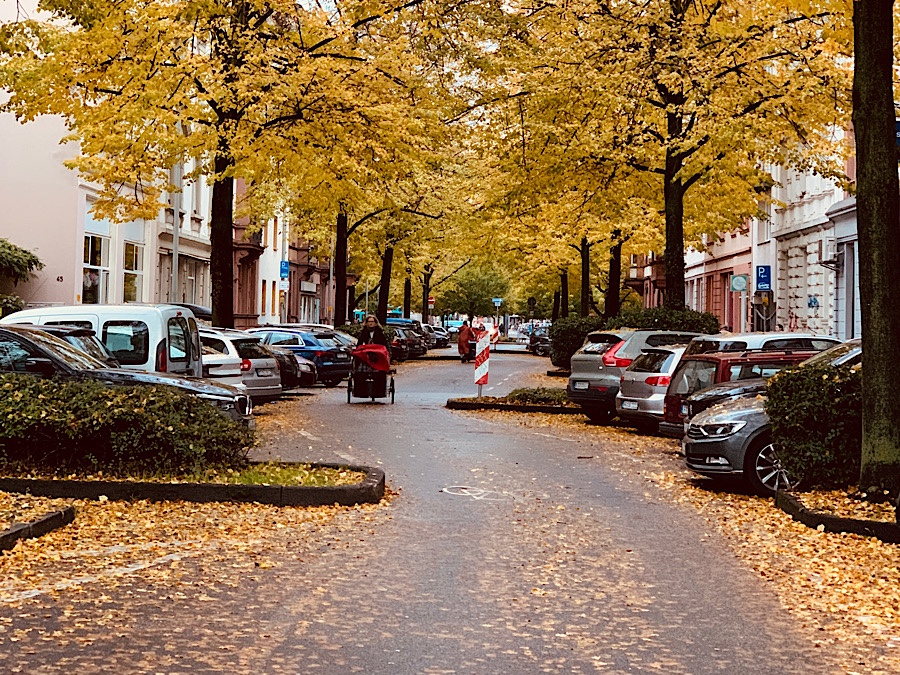
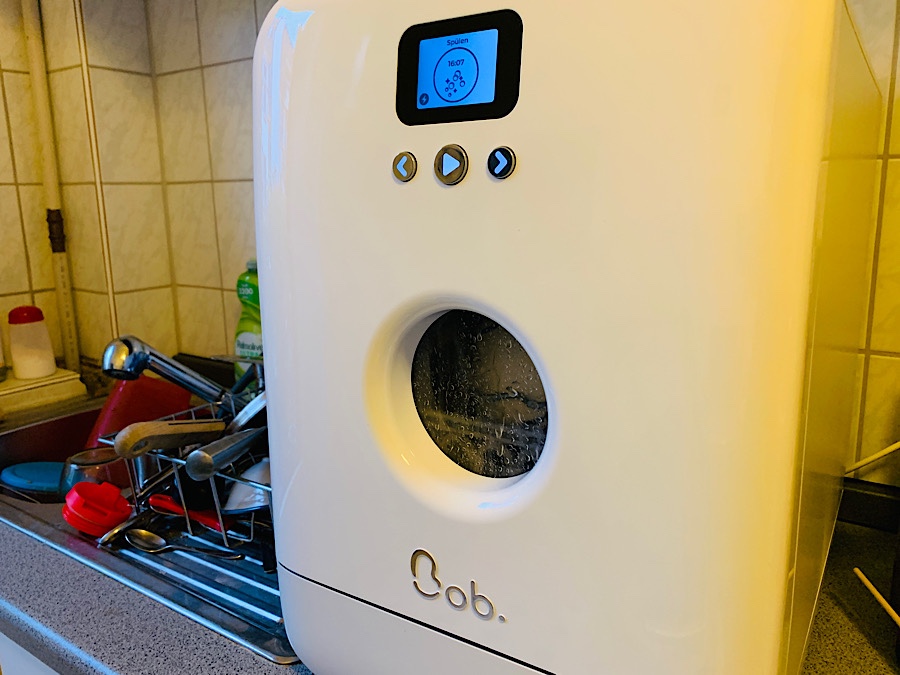
The blog parade and the feedback were so energising, I had published more articles than usual 😁:
- Blog parade: My latest tales of everyday microaggressions
- Me imperfectly navigating everyday microaggressions
- 12 of 12: A day in October 2023
- Frankfurter Funzelfahrt 2023
- My autumn bucket list 2023
- My dear Loneliness!
This energy is kind of addicting 😄. Which is good. It helps me to continue to write on hard-to-write design articles 😂.
How was your October? Comment below 👇!
