Make your research clear at a glance
Turn complex content into visuals people understand, remember—and trust.
Great research—but struggling to show that same quality visually?
Design takes too much time and often feels unnecessarily complicated?
Invest one to two days and learn how to communicate visually with clarity.
In hands-on design sprints, you’ll develop step by step visuals that actually work:
readable text, clear messages, and designs that capture attention.
Visual design that works follows clear principles.
Once you understand them, you can create results you’re proud of.
Curious and want to learn more?
Let’s talk—no strings attached.
Does this sound familiar?
You’re looking at your research results and thinking:
These are really good.
But as soon as you need to visualize them, the outcome feels… average.
You try things out, move elements around, tweak details—and in the end, you think:
“It looks okay… but it doesn’t reflect the quality behind it.”
You’ve also noticed that—even in science—those who present well are more likely to be seen and understood.
Maybe you’re thinking:
A design course could help…
—but when would you even fit that in?
And would a single workshop really make a difference?
So you put it aside.
Until the next time you present—and realize again:
this could be better.
I see this all the time:
strong research, but visual communication that doesn’t keep up.
The good news: visual communication is a skill you can learn.
Now imagine this:
Your communication materials look professional, consistent, and purposeful.
They are easier to understand—and more memorable.
You work faster because you know what matters—and what doesn’t.
Your communication becomes a strategic advantage in grant applications.
You use AI as a supportive tool—guided by clear criteria and ethical boundaries.
You feel confident instead of overwhelmed when working with visual communication.
You’re proud of your work—and present it with confidence, internally and externally.
Your research is visible and recognized—within your field and beyond.
Better communication leads to greater recognition—supporting funding, stability, and future growth.
What if…
…you had a checklist that helps you create clear and engaging visuals?
…you practiced these design principles in guided design sprints until they truly stick?
…you received templates you can adapt to your own work—and reuse in the future?
…you left the training with more confidence, less stress, and materials that help you communicate your work more effectively?
Hi! I’m Shau Chung!
I work as a science communicator at the Max Planck Institute of Biophysics, designing strategies that connect research with diverse audiences.
As a trained visual designer, I help researchers and science communicators communicate complex ideas clearly and credibly—so their research creates impact, builds trust, and gains support, even when time and resources are limited.
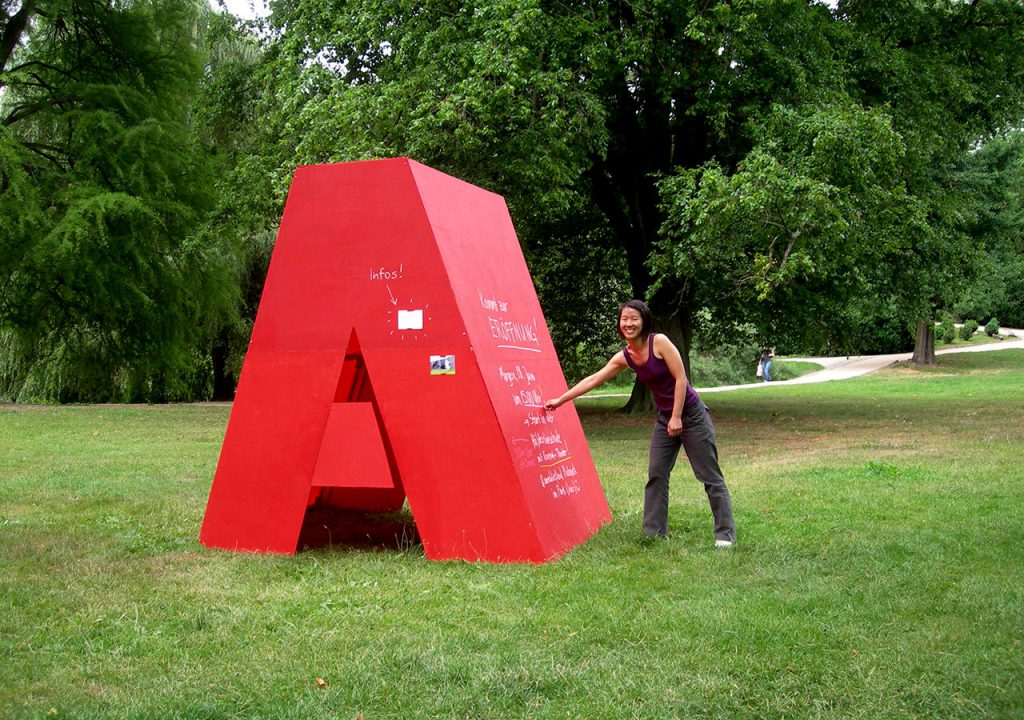
I believe in working with play and humor, because that’s where real connection happens, barriers disappear, and complex ideas truly stick.
What participants say
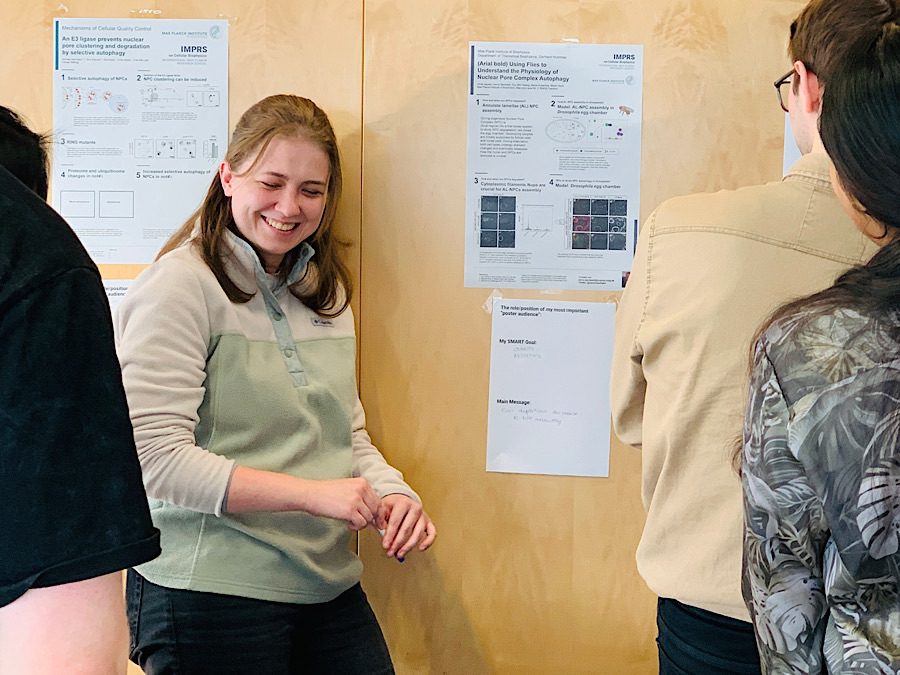
“I found the workshop very meaningful and systematic.
Frankly speaking, it was absolutely an amazing experience!”
Participant, Poster Design Sprint
“We achieved more than we expected.”
Client, Magazine Design Workshop
I create formats for:
Researchers who…
- want to work on their own figures or presentations during the workshop
- want a clear plan and checklist to create high-quality, accessible visuals faster
- want well-designed figures and posters that leave a lasting impression
- enjoy receiving recognition and positive feedback from peers
- want to gain confidence in visual communication—and use it to advance their career
Science communicators who…
- want to understand and confidently apply visual communication principles
- want to create materials that are professional, consistent, and targeted
- want to use limited resources efficiently through clear priorities and reusable templates
- want visual materials that are durable, adaptable, and easy to maintain
- want to use AI as a supportive tool—guided by clear criteria and ethics
- want to feel confident instead of overwhelmed
Research institutions that…
- want to remain visible and relevant—within their field and beyond
- want to use visual communication strategically to support long-term funding
- want to engage diverse stakeholders (funders, partners, policymakers, public)
- want communication that is consistent and aligned with their mission
- want to strengthen trust, credibility, and recognition
If this sounds like what you’re looking for, let’s talk.
In a 20 minute call, we’ll explore your topic and goals—and find out which format fits best.
What you’ll get
You’ll receive formats that lead to tangible results.
During the workshop, we work directly on your own materials.
That means:
You leave not just with new knowledge—
but with concrete results and clear next steps.
Core topics
Visual design principles
Learn principles you can apply immediately to create clear, accessible, and impactful visuals—whether for figures, presentations, posters, or grant proposals.
Visual strategy
Learn how to use visual communication strategically to reach different audiences and build trust.
Visual sustainability
Create communication that lasts: precise, adaptable, and easy to update.
Visual inclusion
Design visual communication that is accessible—both technically and emotionally.
Workshop examples
Poster Design Basics
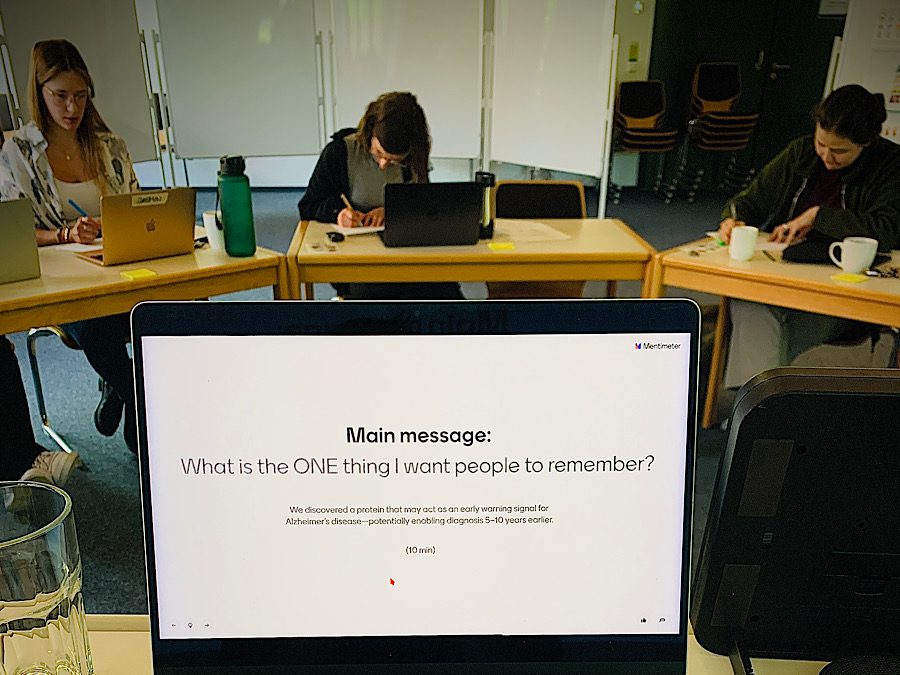
- Define your goal, audience, and key message
- Design for context and real-world use
- Learn principles for clarity and readability
- Apply them directly to your own poster
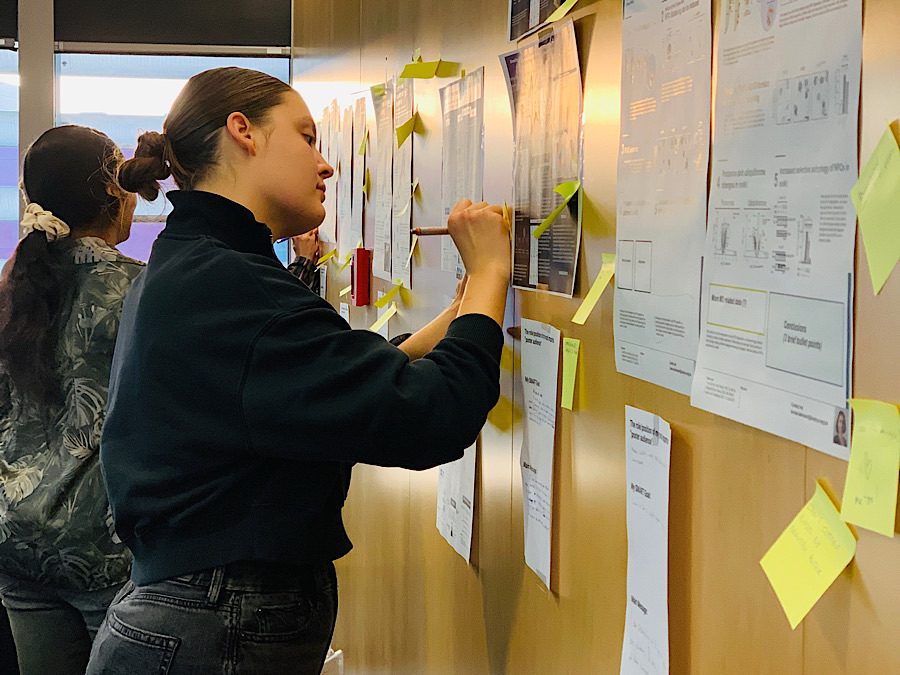
- Two poster sessions with feedback
Poster Design Advanced
- Choose layouts that match your content and message
- Refine and strengthen your visual structure
- Apply advanced design principles
- Two poster sessions with feedback
Social Media Template Design
- Analyze your current communication and identify key challenges
- Define your goals, audience, and core message
- Translate your strategy into a clear visual concept
- Learn essential design principles for clarity and consistency
- Apply these principles directly to your own templates
- Create a practical and realistic content calendar
- Define clear next steps for consistent implementation
What your next steps could look like
- We discuss your needs, goals, and timeline
- We agree on a format and schedule a date
- We refine the details to tailor everything to your needs
- We deliver the training or workshop
- You receive a short evaluation and clear next steps
By the end, you and your team will communicate more clearly, work more efficiently, and create visuals you can present with confidence.
Let’s talk
I’d love to hear from you.
If you want your research to be better understood and more visible, now is a great time to start.
In a 20 minute conversation, we’ll discuss your situation, clarify your goals, and see whether working together is a good fit. No pressure.